
Research & whitepapers
Evidence-based research to guide businesses, policymakers, and city leaders.
Featured insights
At Insight Economics and Business Strategist, we believe leadership begins in the mind and that ideas come before action. Our insights blend economic thinking with strategic analysis to challenge assumptions and open new paths forward. By translating ideas into clear perspectives, we support forward-looking leaders in shaping their next game and making better decisions in a complex world.
Pressure to purpose
Effective leadership is forged through experience in the crucible of real-world challenges. This essay explores research on how leaders grow and strengthen their capabilities when tested by high-pressure circumstances, complex problems, and critical decision points. The hope is to provide evidence-based insights to help leaders understand how formative experiences shape judgment, resilience, and strategic thinking—enabling them to navigate uncertainty and drive meaningful impact.

Managing change
Effective strategy is the foundation of responsible leadership for enduring progress for happy and functional businesses. This white paper explores how leaders lead strategy across divisions, departments, groups, and teams, while adapting to complex and changing environments. The goal is to provide evidence-based insight to support sound judgment, wise stewardship of resources, and strategic action that advances long-term, shared prosperity.

Leadership as strategy
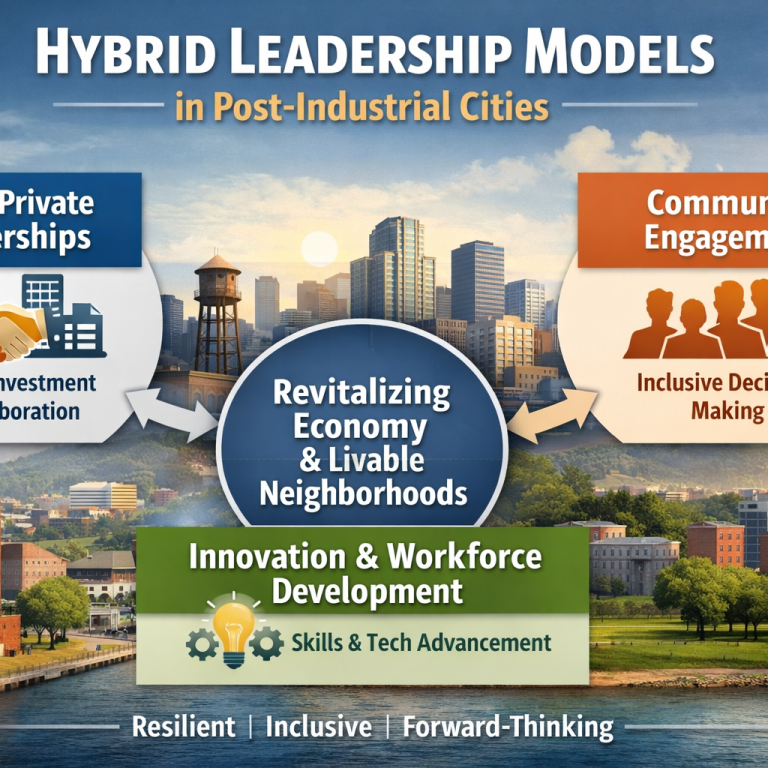
Public policy is a powerful instrument in shaping the trajectory of post-industrial cities, but its effectiveness is ultimately determined by the tone and discipline of leadership. This white paper delivers evidence-based analysis of leadership influencing urban transformation, workforce evolution, and sustainable growth, while examining how leadership approach, governance, and decision-making directly affect outcomes. Together, these insights equip leaders to align strategy with greater clarity, credibility, and impact.
Leadership in church
The first-century church arose amid political oppression, cultural diversity, and theological conflict, creating significant organizational and ethical challenges. The apostles, shaped by direct formation under Jesus Christ, responded with leadership marked by integrity, collaboration, relational engagement, and servant-oriented governance. This study demonstrates how ethical consistency, both publicly and privately, fosters accountability, trust, and inclusive organizational cultures.

Dignity as a strategy
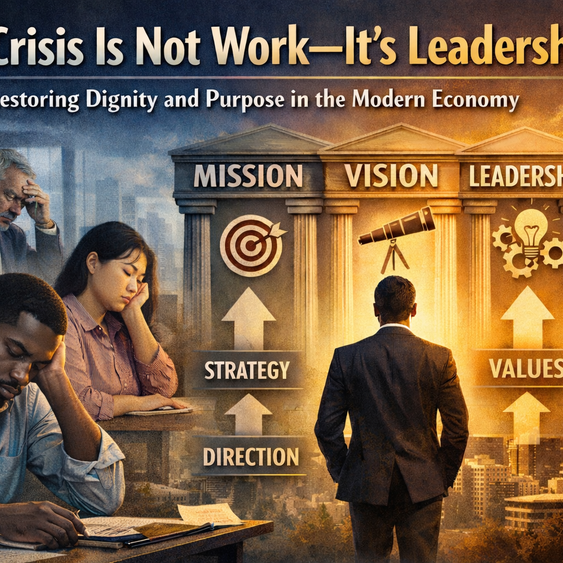
This whitepaper reframes employee disengagement as a failure of organizational purpose and leadership rather than a decline in work ethic. By connecting dignity at work to strategic clarity, effective management, and mission-driven organizations, it shifts the focus from blaming workers to strengthening institutions and offers leaders a practical framework for restoring meaning, trust, and performance. It challenges organizations to reclaim vision, discipline, and leadership as economic necessities, not optional values.
(QBR) is a structured forum designed to assess organizational performance, align leadership on priorities, and inform strategic decision-making. It provides a disciplined approach to reviewing financial results, operational outcomes, and key initiatives within the context of broader business objectives. When executed effectively, the Quarterly Business Review strengthens alignment across teams, improves execution discipline, and supports sustained organizational performance.
QTR Business Review

From a community economics perspective, anchors are not simply employers or service providers, but place-based institutions with enduring influence over workforce development, local procurement, real estate, and wealth retention. When intentionally aligned with community goals, anchor institutions can stabilize local economies, strengthen economic multipliers, and expand opportunity for historically excluded populations. Ultimately, activating anchor institutions as economic partners and system leaders is essential to achieving long-term, shared prosperity at the community level.
Anchor Institutions